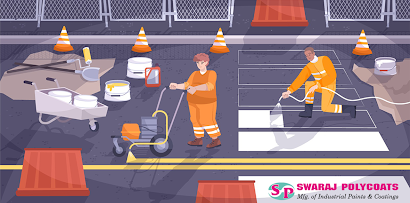
Industrial environments such as factories, warehouses, manufacturing plants, and processing units are filled with heavy machinery, constant movement, and high-risk operations. In such conditions, flooring plays a crucial role in ensuring workplace safety.
One of the most effective flooring solutions for improving safety is epoxy flooring. Known for its durability, seamless finish, and resistance properties, epoxy flooring can help reduce several common workplace flooring hazards.
In this blog, we will explore how epoxy flooring enhances industrial safety, reduces risks, and creates a more efficient work environment.
What is Epoxy Flooring?
Epoxy flooring is a protective surface created by applying multiple layers of epoxy resin over concrete floors. It forms a strong, seamless, and non-porous surface that can be suitable for many industrial applications.
Common Safety Challenges in Industrial Flooring
Before understanding the benefits of epoxy flooring, it is important to identify some of the common risks found in industrial environments.
- Slippery floors due to oil, water, or chemicals
- Cracks and uneven surfaces
- Dust accumulation
- Poor visibility of pathways
- Chemical spills and surface damage
These hazards can contribute to accidents, injuries, maintenance problems, and productivity loss.
1. Anti-Slip Surface Reduces Accidents
One of the major advantages of epoxy flooring is that the coating system can be customized with anti-slip aggregates or additives for improved traction.
How it helps:
- Provides better grip for workers
- Helps reduce the risk of slips and falls
- Suitable for wet or oily environments when properly specified
Anti-slip additives can be incorporated during installation depending on the requirements of the site.
2. Seamless & Smooth Surface Eliminates Hazards
Traditional flooring such as damaged concrete or tiled surfaces may contain joints, cracks, and uneven sections that can create additional workplace hazards.
- Trips and falls
- Dust buildup
- Difficult cleaning
Properly installed epoxy flooring creates a seamless surface that can make industrial floors easier to clean and maintain.
Key benefits:
- Fewer joints and gaps
- Easier movement of machinery
- Cleaner and more manageable working conditions
3. High Durability Under Heavy Loads
Industrial floors must withstand heavy machinery, forklifts, equipment, and continuous foot traffic.
A properly specified epoxy flooring system can provide high mechanical strength and resistance to wear, making it suitable for demanding industrial areas.
Safety impact:
- Helps prevent sudden surface deterioration
- Reduces flooring-related hazards
- Supports long-term operational reliability
4. Chemical Resistance for Hazardous Environments
Many industries regularly handle oils, chemicals, solvents, and other potentially aggressive substances.
- Acids
- Oils
- Industrial chemicals
Appropriately formulated epoxy flooring systems can provide resistance to a range of chemical exposures, helping protect the underlying concrete and maintain the integrity of the floor.
Safety advantages:
- Helps protect the flooring from chemical damage
- Reduces deterioration caused by spills
- Helps maintain a safer working surface
5. Fire Resistance & Heat Protection
Certain specialized flooring and coating systems can provide improved performance in areas exposed to heat. However, fire performance varies by product and should always be verified from the manufacturer's technical documentation.
Potential benefits include:
- Improved performance in demanding environments
- Better protection of the underlying floor system
- Support for site-specific safety requirements
6. Improved Visibility with Safety Markings
Epoxy flooring can be combined with custom colors and floor markings to clearly identify different areas of an industrial facility.
- Walkways
- Hazard zones
- Emergency routes
- Loading areas
Why it matters:
- Improves navigation
- Reduces confusion between work zones
- Supports organized workplace movement
High-contrast colors and suitable markings can also improve visibility in busy industrial environments.
7. Dust-Free & Hygienic Surface
Uncoated concrete floors can generate dust and may become difficult to clean when damaged or heavily worn.
- Affect air quality
- Increase cleaning requirements
- Reduce workplace cleanliness
Properly installed epoxy flooring creates a sealed, easy-to-clean surface that can support cleaner industrial environments.
Safety benefits:
- Easier floor cleaning
- Reduced dust from exposed concrete
- Suitable for applications where hygiene is important, subject to the appropriate flooring specification
8. Resistance to Temperature Changes
Industrial environments can experience significant temperature variations depending on the process and location.
Depending on the formulation and system design, specialized flooring systems can be selected for environments involving:
- Cold storage conditions
- High-temperature areas
Potential result:
- More consistent surface performance
- Better suitability for demanding environments
- Reduced risk of premature flooring deterioration when the correct system is selected
9. Load Bearing & Impact Resistance
Industrial flooring can be exposed to impacts from dropped tools, moving equipment, forklifts, and heavy loads.
Properly specified epoxy systems can provide good mechanical and impact resistance for demanding industrial applications.
Safety impact:
- Helps protect the floor from mechanical damage
- Reduces the likelihood of damaged surface areas
- Supports reliable industrial operations
10. Easy Maintenance Reduces Risk
Poorly maintained floors can develop cracks, damaged areas, contamination, or other conditions that may create workplace hazards.
Epoxy flooring is generally easy to clean and maintain when correctly specified and installed.
- Simple cleaning
- Low routine maintenance requirements
- Easier inspection of the floor surface
Safety advantage:
- Consistent surface condition
- Easier identification of damaged areas
- Long-term flooring reliability
Why Professional Installation is Critical for Safety
Even a high-quality epoxy flooring system can perform poorly if it is installed incorrectly. Surface preparation, moisture assessment, mixing, application thickness, curing, and environmental conditions all influence final performance.
Professional installers ensure:
- Proper surface preparation
- Correct material mixing and application
- Appropriate anti-slip customization
- Correct coating thickness
- Quality materials suitable for the application
Industries That Benefit from Epoxy Safety
- Manufacturing plants
- Warehouses
- Hospitals
- Pharmaceutical industries
- Food processing units
- Automotive industries
Epoxy Flooring vs Traditional Flooring
The following comparison provides a general overview of how epoxy flooring can perform against conventional flooring in industrial environments.
| Feature | Epoxy Flooring | Traditional Flooring |
|---|---|---|
| Slip Resistance | Can be high with suitable anti-slip specification | Depends on surface type and condition |
| Durability | High when correctly specified | Varies by flooring type |
| Maintenance | Generally low | Can be higher depending on surface |
| Safety | Can be excellent with proper specification | Depends on flooring condition |
| Seamless Surface | Yes | Usually no |
Common Mistakes That Reduce Safety
- Choosing low-quality epoxy materials
- Skipping anti-slip requirements
- Poor surface preparation
- Incorrect installation
- Ignoring moisture or environmental conditions
- Neglecting regular maintenance
Business Benefits of Safe Flooring
- Fewer Accidents: Properly specified flooring can help reduce slip, trip, and surface-related risks.
- Higher Productivity: Smooth and well-maintained floors support easier movement of workers, vehicles, and equipment.
- Lower Costs: Durable flooring can help reduce maintenance, repair, and downtime requirements.
- Better Workplace Organization: Floor markings can help separate pathways, operational zones, and hazard areas.
Signs Your Floor is Unsafe
- Slippery surface
- Cracks and surface damage
- Excessive dust buildup
- Damaged or fading safety markings
- Uneven or deteriorated areas
If you notice these conditions, it may be time to inspect the existing flooring system and consider professional repair, recoating, or replacement.
Final Conclusion
Industrial safety is not just about equipment and workplace protocols—it also starts from the ground up. Flooring plays an important role in reducing hazards, supporting efficient movement, and maintaining a safe working environment.
Epoxy flooring offers a powerful combination of durability, anti-slip customization, chemical resistance, seamless construction, and easy maintenance when the correct system is selected and professionally installed.
By investing in professional epoxy flooring solutions, industries can create safer, cleaner, and more efficient working environments while protecting their flooring investment over the long term.
Frequently Asked Questions (FAQs)
Is epoxy flooring safe for industrial use?
Yes. Properly specified and installed epoxy flooring can provide durable, easy-to-clean, chemical-resistant, and customizable surfaces suitable for many industrial environments.
Can epoxy flooring prevent accidents?
Properly designed epoxy flooring can help reduce common flooring hazards. Anti-slip additives, seamless construction, clear markings, and good maintenance can contribute to a safer working environment.
How long does epoxy flooring last?
The service life depends on the product system, installation quality, traffic, chemical exposure, maintenance, and environmental conditions. A properly installed system can provide many years of service.
Is epoxy flooring suitable for wet areas?
Yes. Epoxy flooring can be suitable for wet areas when the correct system is selected. Anti-slip additives can also be incorporated to improve traction where required.
Can epoxy flooring withstand heavy machinery?
Properly formulated industrial epoxy systems can withstand heavy traffic and mechanical loads. The coating system should be selected according to the expected load, impact, and operating conditions.
Does epoxy flooring require maintenance?
Epoxy flooring generally requires relatively simple routine cleaning and maintenance. Regular inspection helps identify damage early and maintain the performance of the flooring system.
Can epoxy flooring be customized for safety?
Yes. Epoxy floors can be customized with anti-slip aggregates, different colors, safety markings, designated walkways, and other application-specific features.